5 Ways Hosting Providers Lose Custom Deals
Custom hosting projects fail before they start. Here are the 5 most common reasons providers lose deals and how to close them faster with WHMCS.
MX Modules Team
(Updated )

In this article
- 1. Slow Response Time
- Why This Happens
- The Data
- How to Fix It
- 2. Unclear Scope
- Why This Happens
- How to Fix It
- 3. No Signature, No Commitment
- Why This Happens
- How to Fix It
- 4. Payment Friction
- Why This Happens
- How to Fix It
- 5. No Follow-Up System
- Why This Happens
- How to Fix It
- The Compounding Effect
- Frequently Asked Questions
- How many proposals should a hosting provider send per month?
- What's a good close rate for hosting proposals?
- Should I offer discounts for full upfront payment?
- What if the client wants to negotiate the price?
- How long should a proposal stay valid?
Standard hosting plans sell themselves. A client picks a plan, enters payment details, and WHMCS handles the rest. No sales process required.
Custom projects are different. Server migrations, managed services, infrastructure builds. These require a conversation, a quote, and a decision. And this is where hosting providers lose money, not because their prices are wrong, but because the sales process has gaps.
Here are the 5 most common ways custom deals fall apart and what to do about each one.
1. Slow Response Time
A potential client emails asking about a managed server setup. You're busy with tickets, so you reply 2 days later with a rough estimate. By then, they've already contacted three other providers. Two of them replied within hours.
Why This Happens
Hosting providers are technical teams, not sales teams. You're fixing servers, managing infrastructure, and handling support. Quoting custom work gets pushed to "when I have time."
The Data
According to a Harvard Business Review study on B2B sales, companies that respond within 5 minutes are 100x more likely to connect with the lead than those that wait 30 minutes. For hosting, a same-day response is the minimum. Within a few hours is competitive.
How to Fix It
Have a proposal template ready. Don't start from scratch every time. Build 3-4 templates for your most common custom projects:
| Template | Covers |
|---|---|
| Server migration | Assessment, migration, testing, DNS cutover |
| Managed services retainer | Monthly scope, SLA, support hours |
| Infrastructure build | Hardware, setup, configuration, handover |
| Website/email migration | Content transfer, DNS, SSL, testing |
With a template, you can send a professional proposal in 15 minutes instead of spending an hour writing from scratch. MX Proposals supports templates on the Pro plan, but even a saved document in Google Docs works.
The goal: respond with a formal proposal within 4 hours of the inquiry. Not a rough email estimate. A real proposal with line items and pricing.
2. Unclear Scope
The client says "we need to migrate our servers." You quote $2,000 for the migration. They accept. Halfway through, they mention 4 additional servers, a database cluster, and custom firewall rules that weren't in the original conversation.
Now you're either doing extra work for free or having an uncomfortable renegotiation.
Why This Happens
Email conversations are terrible for scope definition. Details get scattered across 15 messages. Neither party has a clear, single document that says "this is what's included and this is what's not."
How to Fix It
Put the scope in a proposal with line items, not an email. A proper services table forces you to think through every component:
| Line Item | Qty | Unit Price |
|---|---|---|
| Server assessment and migration plan | 1 | $300 |
| cPanel migration (per server) | 2 | $150 |
| DNS migration and SSL setup | 1 | $100 |
| Post-migration testing (2 hours) | 2 hrs | $75/hr |
| Out of scope: Additional servers | Quoted separately |
When the client signs a proposal with this level of detail, both sides know exactly what "$2,000" covers. If they need 4 more servers, that's a new line item or a new proposal.
Add an "Out of scope" section. Explicitly state what's NOT included. This prevents assumptions and protects you from scope creep.
3. No Signature, No Commitment
The client says "looks good, go ahead" in an email. You start working. Three weeks in, they say they never formally approved the project and want changes to the scope without paying more.
Why This Happens
Email approval feels like agreement, but it's ambiguous. "Looks good" could mean "I approve this exact scope and pricing" or "the general direction seems fine, let's keep discussing." Without a formal signature, there's no clear moment of commitment.
How to Fix It
Require a digital signature before starting work. This doesn't need to be complicated. A signature on the proposal document establishes:
- The client reviewed the specific scope and pricing
- They took a deliberate action to accept (not a casual email reply)
- There's a timestamp and record of when they committed
- The signed document is locked and can't be edited after the fact
This protects both sides. The client knows you won't add charges beyond what's in the signed proposal. You know they can't dispute what was agreed.
For WHMCS providers, MX Proposals includes digital signatures on both the free and Pro tiers. But even if you use another tool, the principle is the same: get a signature before starting work.
4. Payment Friction
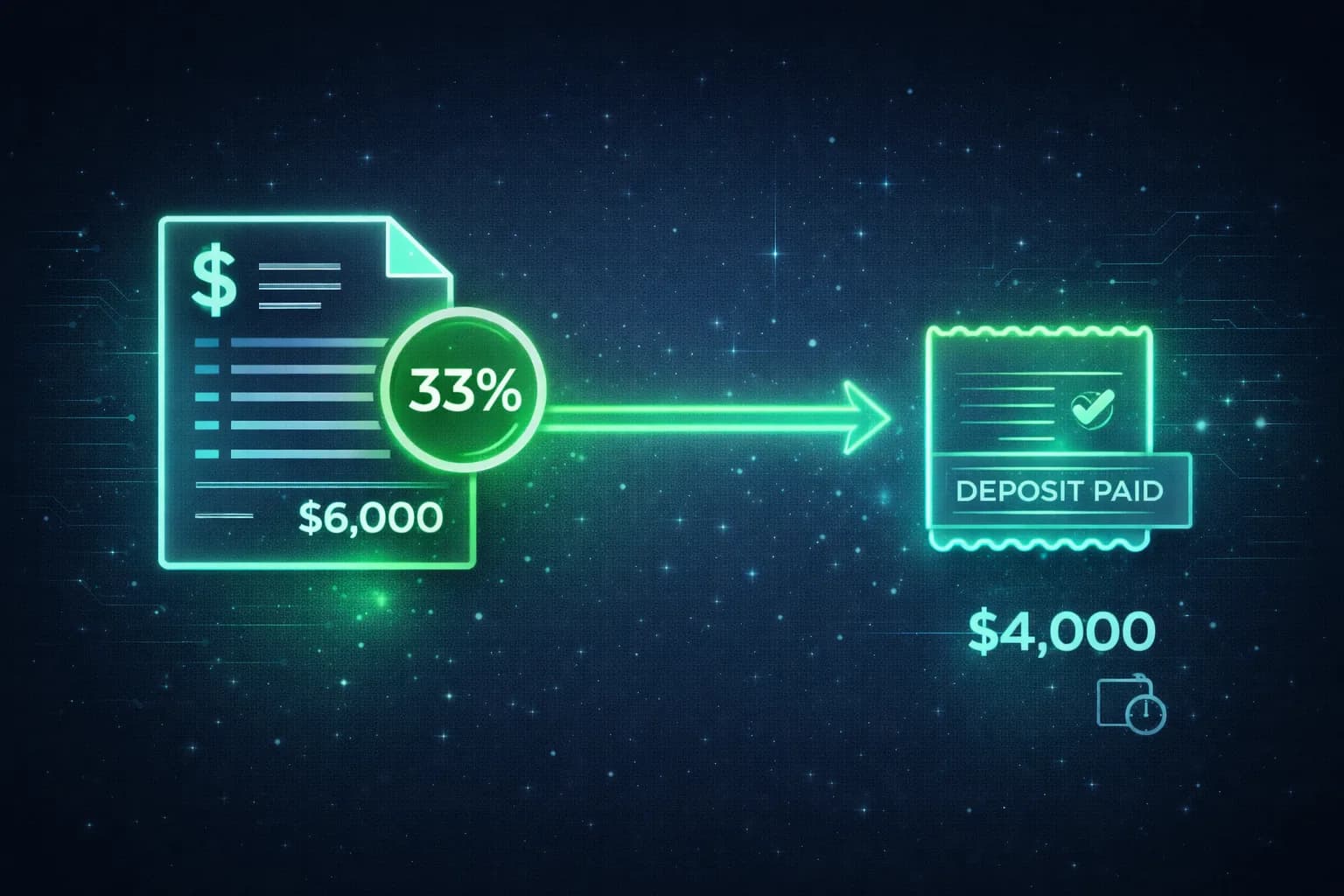
You send a proposal for $6,000. The client likes the scope but says "that's a lot upfront." They ask if you can split it. You say sure, but now you're manually tracking partial payments in a spreadsheet.
Or worse: the client ghosts because they can't justify $6,000 in one budget cycle, even though the project would save them money over 12 months.
Why This Happens
Most hosting providers offer one payment option: pay the full amount now. For projects over $2,000, this creates friction. The client may have the annual budget but not the immediate cash flow.
How to Fix It
Offer structured payment options on every proposal over $1,000:
| Option | Structure | Best for |
|---|---|---|
| Full payment | 100% upfront | Clients who want it done and invoiced cleanly |
| Deposit + balance | 50% now, 50% on completion | Medium projects ($1K-3K) |
| Deposit + installments | 33% now, rest in monthly payments | Larger projects ($3K+) |
Present all options in the proposal. Let the client choose. You'll find that many clients who would hesitate at full payment will immediately choose the installment option.
The math works in your favor:
- $6,000 full payment: client hesitates, deal delayed 2-4 weeks (or lost)
- $2,000 deposit + 4x $1,000/month: client signs today, you start work immediately
Same total revenue. Faster close. Lower chance of losing the deal.
MX Proposals handles deposits and payment plans natively. If you're using manual invoicing, create the invoices upfront with scheduled due dates so the client sees the full plan.
5. No Follow-Up System
You send a proposal on Monday. Silence. A week later, you wonder if they even opened it. You send a "just checking in" email that feels awkward. Two weeks later, the deal is dead.
Why This Happens
Hosting providers don't have sales CRMs. WHMCS tracks clients and invoices, not sales pipelines. Once you send a proposal, there's no system telling you whether the client opened it, how long they spent reading it, or when to follow up.
How to Fix It
At minimum, track two things: whether they opened the proposal and when to follow up.
A simple follow-up cadence:
| Day | Action | Trigger |
|---|---|---|
| Day 0 | Send proposal | |
| Day 1 | Check if viewed | If viewed but no action, wait |
| Day 3 | First follow-up | "Do you have any questions about the proposal?" |
| Day 7 | Second follow-up | "The proposal expires on [date]. Happy to jump on a call." |
| Day 14 | Final follow-up | "Closing this out. Let me know if you'd like to revisit." |
MX Proposals shows "Viewed" status in the admin panel, so you know the client opened the proposal without asking them. This lets you time your follow-up: if they viewed it yesterday and haven't signed, day 3 is the right time to reach out. On the Pro plan, you can also set up webhooks to get instant Slack or email alerts when a client views, signs, or declines a proposal.
If you're using manual proposals, add calendar reminders for follow-ups. The key is having any system at all, not relying on memory.
The Compounding Effect
These 5 problems don't happen in isolation. A slow response leads to a rushed proposal with unclear scope. No signature means no commitment. No payment flexibility means the committed client can't pay. No follow-up means the interested client forgets.
Fix these in order of impact:
- Templates (solves slow response + unclear scope)
- Signatures (solves commitment problem)
- Payment options (solves payment friction)
- View tracking + follow-up (solves dead leads)
You don't need to fix all four at once. Start with templates and signatures. Those two changes alone will close more deals than any pricing change.
Frequently Asked Questions
How many proposals should a hosting provider send per month?
There's no universal number, but if you offer custom services (migrations, managed hosting, development), you should be sending at least 4-8 proposals per month. If you're sending fewer, you might be quoting over email or phone instead of using formal proposals, which leads to the problems described above.
What's a good close rate for hosting proposals?
Industry data for B2B services suggests 20-30% is average. If you're under 20%, the issue is usually scope clarity or payment friction. If you're over 40%, you might be underpricing (or your leads are very well-qualified).
Should I offer discounts for full upfront payment?
You can, but keep it small (5-10%). The goal of payment plans is to remove friction, not to penalize clients who choose installments. A 5% upfront discount gives the client a reason to pay now without making installments feel like a penalty.
What if the client wants to negotiate the price?
Negotiation is normal for custom projects. Use the proposal as the starting point for discussion. If they need a lower price, adjust the scope (remove line items) rather than discounting the same work. This maintains your rates and keeps the scope clear.
How long should a proposal stay valid?
14-21 days is standard for hosting projects. Shorter creates urgency. Longer lets the deal go cold. For large enterprise deals (over $10K), 30 days is reasonable to account for internal approval processes.
Related: Learn how to send client proposals from WHMCS, see how to collect deposits before starting work, or compare MX Proposals vs PandaDoc. For installation and setup, see the MX Proposals documentation.

MX Metrics
Revenue Analytics for WHMCS
Track MRR, ARR, and real profit per client directly in your WHMCS dashboard. Cancel anytime.
MX Proposals
Professional Proposals for WHMCS
Send branded proposals with e-signatures, deposits, and payment plans inside WHMCS.
Did you find this helpful?
Join other WHMCS professionals and get our latest guides and AI tips directly in your inbox.
MX Modules Team
We run a hosting business on WHMCS. These modules are the tools we built to solve our own problems, and now we share them with other providers.